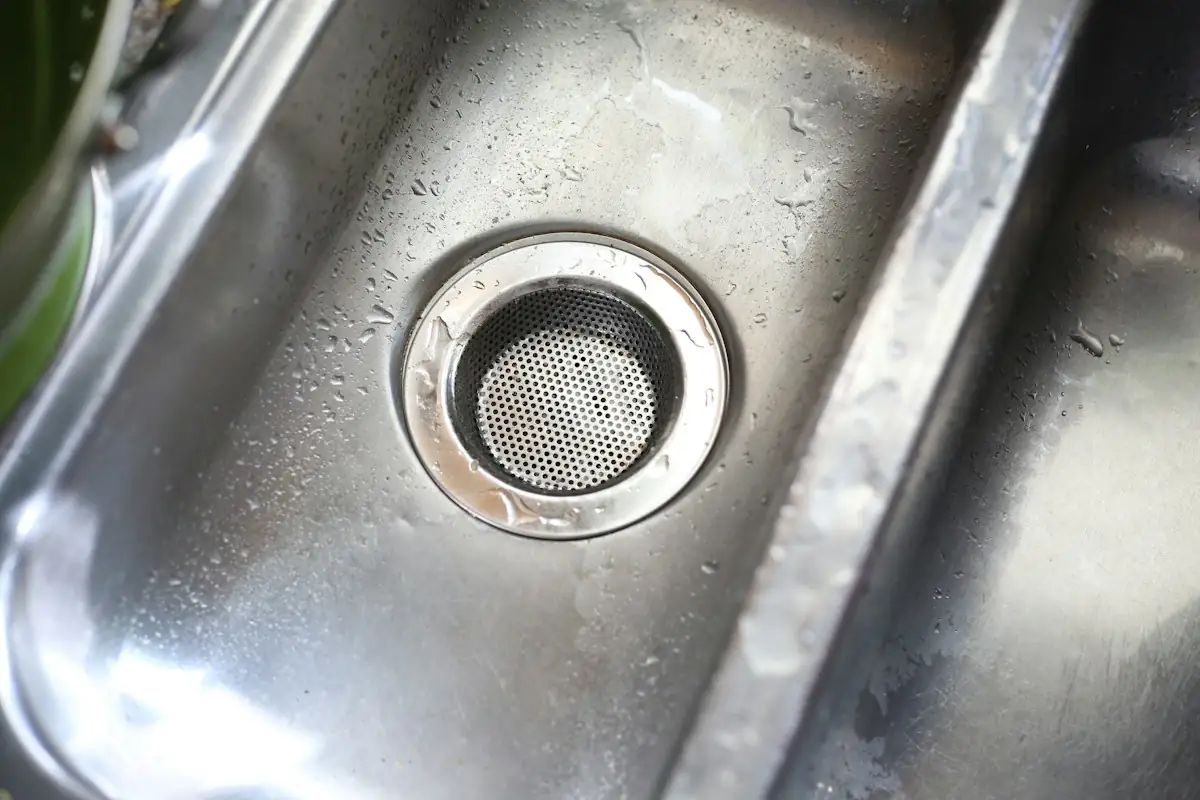
Grease and starch
Hot fat is liquid in the pan and solid a metre down the drain. It coats the inside of the pipe, then catches starch and food bits on top until the opening is the width of a pencil. Kitchen lines in older Newmarket homes often run a long horizontal stretch to reach the stack, which gives grease more room to settle. When we clear them, what comes back on the cable looks like grey candle wax.
Double sink traps
Two-bowl sinks share one trap through a tee or a continuous waste kit. If one side drains and the other backs up, the blockage is usually in the short arm between them. If both sides fill, the clog is past the trap in the wall. Disposals add their own trouble: they grind food into a paste that sticks well, and a disposal mounted on one side can push water up into the other bowl when the line is partly blocked.
- We pull the trap and check it by hand.
- We run a cable through the wall arm toward the stack.
- Hot water then runs through and check every joint for drips before tightening up.
Prevention
- Pour cooled fat down into a can and place it in the green bin or garbage.
- Scrape plates into the organics bin, not the sink.
- Never pour coffee grounds or eggshells down a disposal.
- Once a month, fill both bowls with hot water and let them drain together to flush the line.
Signs you need this in your house
- Sink drains slowly after the dishwasher runs
- Grey water bubbling up in the second bowl
- Food bits floating back after a disposal run
- A rotten smell under the sink
Questions people ask us
Will a plunger help?
For a two-bowl sink, plug one drain tightly with a wet cloth and plunge the other. If that fails, the clog is beyond the reach of a plunger.
Is my disposal safe to keep?
Most are fine used lightly. If you are on a septic system, ask us first.